
Criminal Court Cases in Victoria County
Victoria County divides criminal case records by charge level. The 24th, 135th, 267th, and 377th Judicial District Courts exercise felony jurisdiction. Their filed criminal cases are kept by the Victoria County District Clerk in Room 330 at 115 N. Bridge Street. The counter is open Monday through Friday from 8:00 a.m. to 4:45 p.m. Call 361-575-0581 about records or 361-578-8756 for criminal settings. A felony arrest will not create a District Clerk cause number until the grand jury returns a true bill and the indictment is filed.
County Courts at Law Nos. 1 and 2 hear Class A and B misdemeanors, juvenile matters, and appeals from the Municipal and Justice Courts. The County Clerk, not the District Clerk, supplies those filed documents at 361-575-1478. Victoria Municipal Court holds city ordinance and fine-only state-law cases. Justice Courts keep precinct fine-only cases and some magistrate records. Federal criminal cases are separate again, in the Victoria Division of the Southern District of Texas. A useful Victoria County court search begins by matching the alleged offense to this court split.
The District Clerk page shows its current contacts and case-information route.
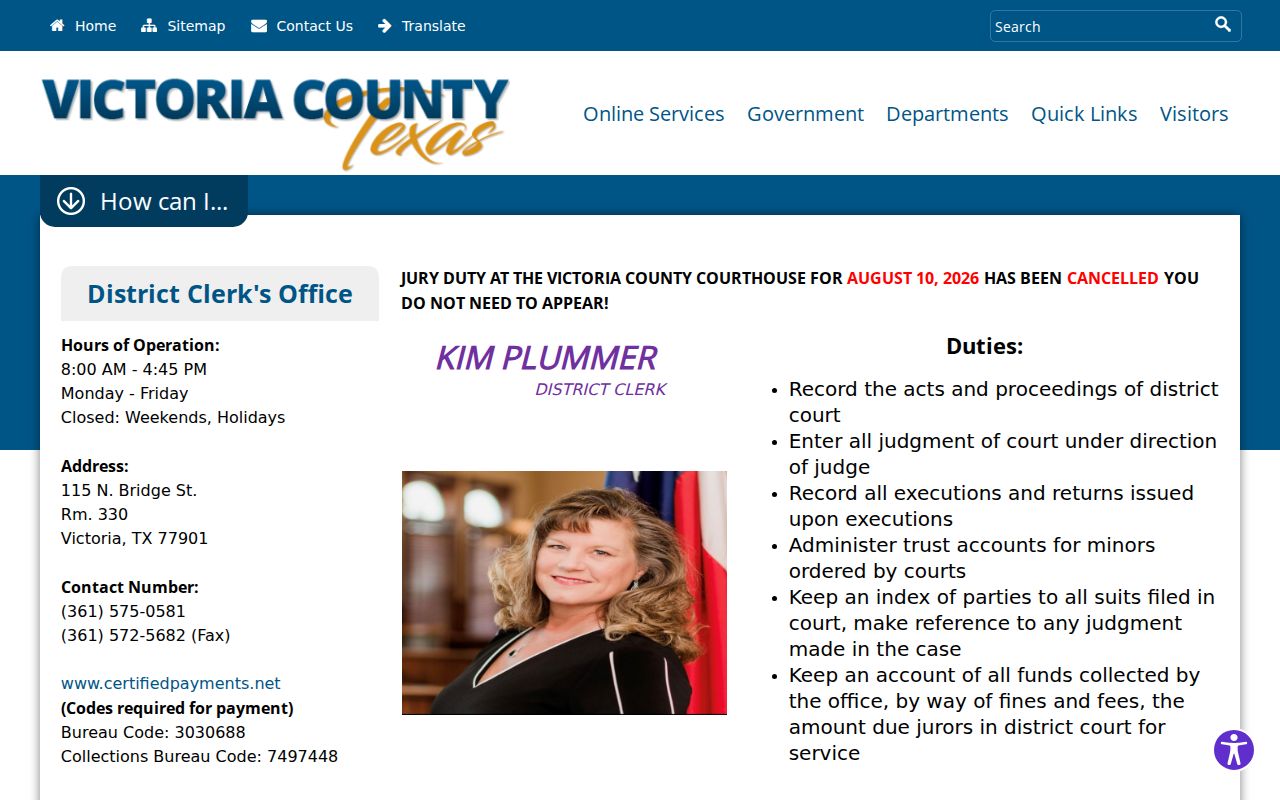
That official page is the sound starting point for filed Victoria County felony dockets and copy questions.
Victoria County Court Case Routing
The most common local search error is asking one clerk for every criminal file. Clerk authority follows the court, not the person named in the case. A misdemeanor complaint and information accepted by the Criminal District Attorney go to a County Court at Law. A felony indictment goes to a District Court. A city citation stays at Municipal Court unless an appeal moves it. This means the same event can leave a police report, booking entry, magistrate record, and later court file in separate places.
The Texas Penal Code Chapter 12 classifications help identify the likely court, though enhancements and offense-specific law can change the baseline charge level.
| Court or office | Victoria County criminal role | Record channel |
|---|---|---|
| District Courts | Indicted felony cases | District Clerk, 361-575-0581 |
| County Courts at Law | Class A/B misdemeanors and appeals | County Clerk, 361-575-1478 |
| Victoria Municipal Court | City ordinance and fine-only cases | Official municipal lookup or court clerk |
| Justice Courts | Precinct fine-only matters and magistrate work | Issuing precinct court |
| Southern District of Texas | Federal criminal prosecutions | PACER or federal clerk |
The official Courts at Law page identifies their jurisdiction and courthouse practices.
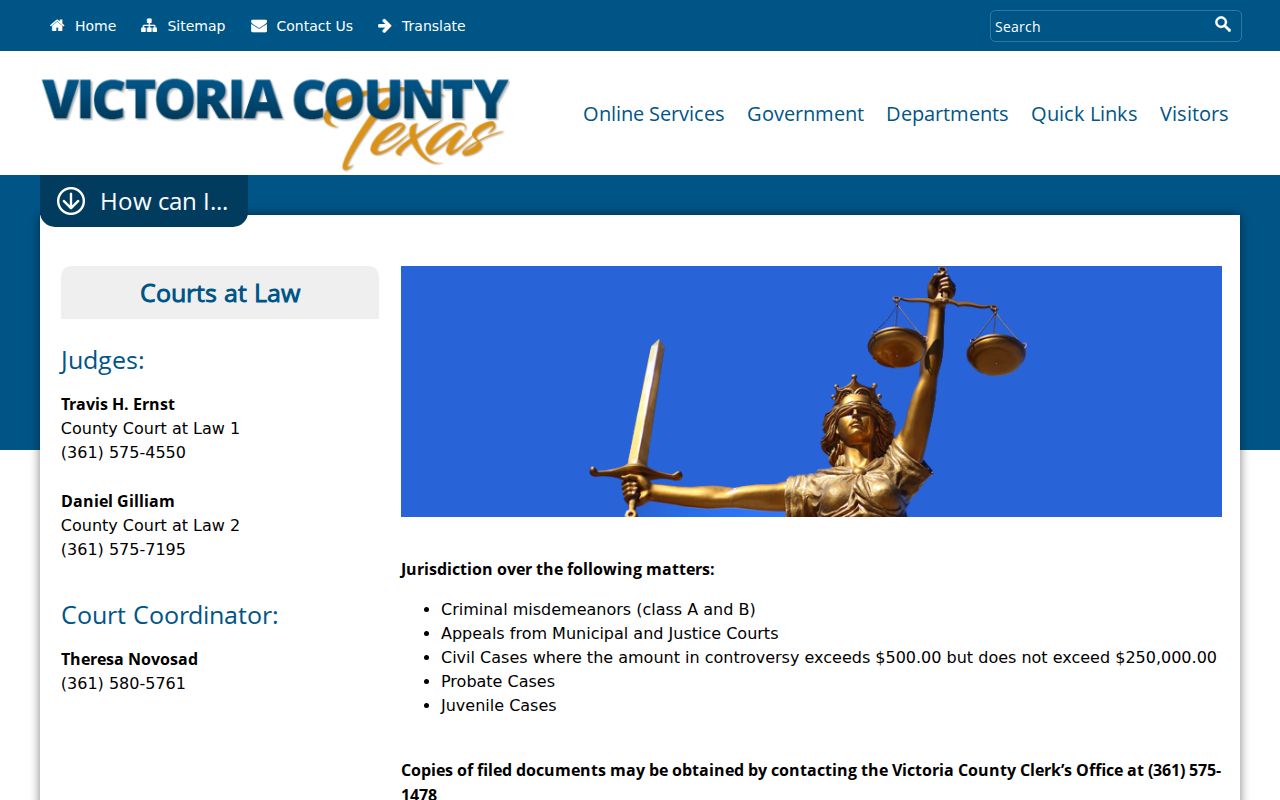
Its routing details help keep a misdemeanor copy request out of the felony clerk's queue.
Victoria County Case Record Searches
Online access is one channel, not the whole record service. Victoria County links Case Information Online from the District Clerk page. re:SearchTX supplies a statewide court layer, but document access varies by court, account role, item, and charge. The Texas Judicial Branch court-record information explains the wider state layer. The clerk counter remains important for a file that is absent online, for a certified copy, or for help confirming that a result belongs to the correct case. Use a cause number when known. It is more precise than a name, especially when several parties share a similar name.
- Identify whether the case is a felony, Class A/B misdemeanor, city fine-only matter, precinct case, or federal prosecution.
- Use the Victoria County case-information link or re:SearchTX for a party-name or cause-number search.
- Confirm the assigned court, filed date, case type, and status before reading individual docket events.
- Open available entries and note the charge, settings, disposition, judgment, and document availability.
- Ask the correct clerk for an inspection, plain copy, or certified copy when the online view is incomplete.
Exact controls can change because the county page links onward to a live service. The documented functional fields are narrow enough to avoid guessing:
| Field label | Type | Required | Use |
|---|---|---|---|
| Person or business name | Text | Search-route dependent | Find party matches, then verify the court and case |
| Cause number | Text | Alternate route | Best direct key when copied from a notice or docket |
| Court | Filter or result | No | Distinguishes District, county-level, and other files |
| Filed date or year | Date/filter | No | Narrows common-name results |
| Case type or status | Filter or result | No | Separates criminal matters and shows whether a file remains open |
The re:SearchTX landing interface displays the statewide access point.
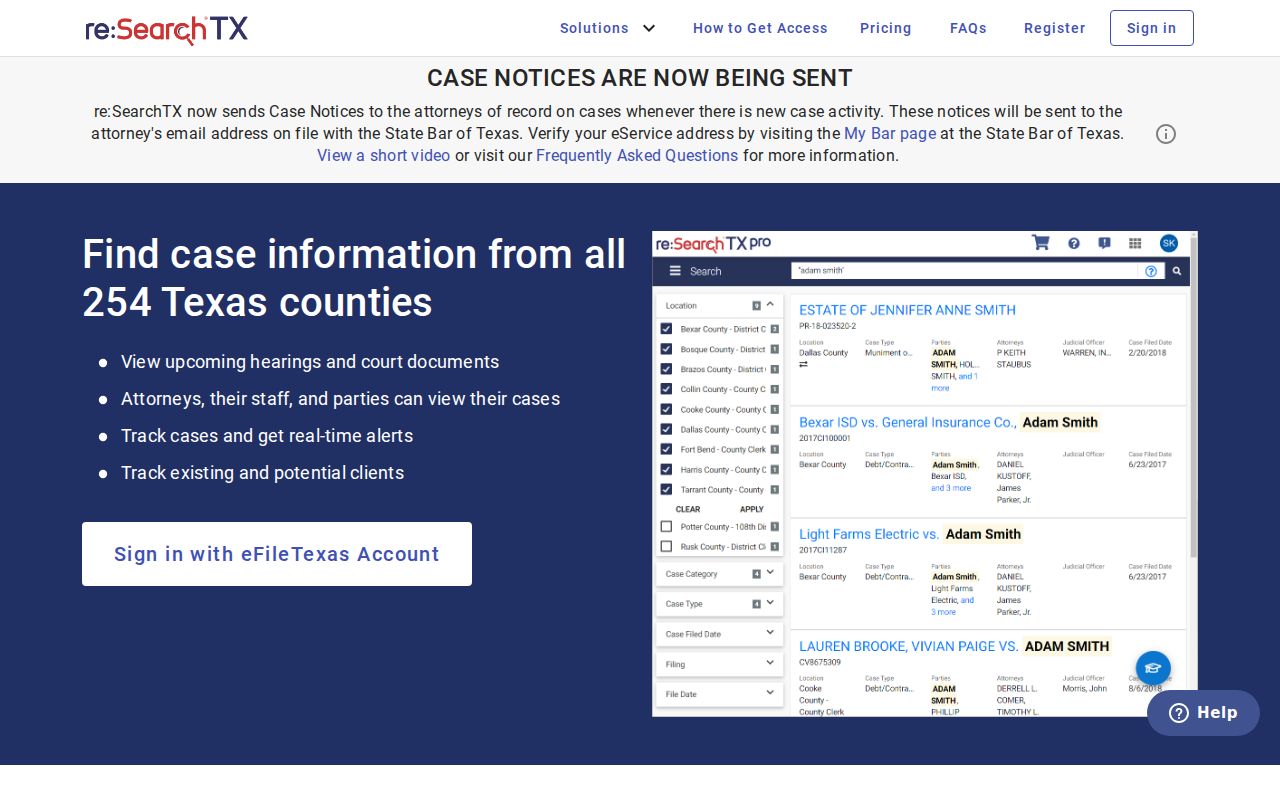
The image represents a supplemental route, while Victoria County clerks remain the source for their own filed case records.
Victoria County Felony Filing Gap
A recent arrest may produce no District Clerk match because the prosecution has not yet reached the filing stage. The Victoria County Criminal District Attorney explains that law enforcement first sends reports for review. Prosecutors screen the proof. Accepted Class A and B misdemeanors proceed by complaint and information, while an accepted felony is presented to a 12-citizen grand jury. A true bill authorizes prosecution and becomes an indictment. A no bill means the grand jury did not authorize that felony prosecution.
This gap matters when reconciling records. The jail may show an intake charge while the clerk has no cause number. The prosecutor can also accept a different charge from the one entered at booking. A no bill occurs before a felony court file is created, and it does not erase the arrest record by itself. Searchers should compare dates and agencies, then check again with the right clerk instead of assuming the jail entry proves that a filed case exists.
The local felony workflow explains the grand-jury decision point.
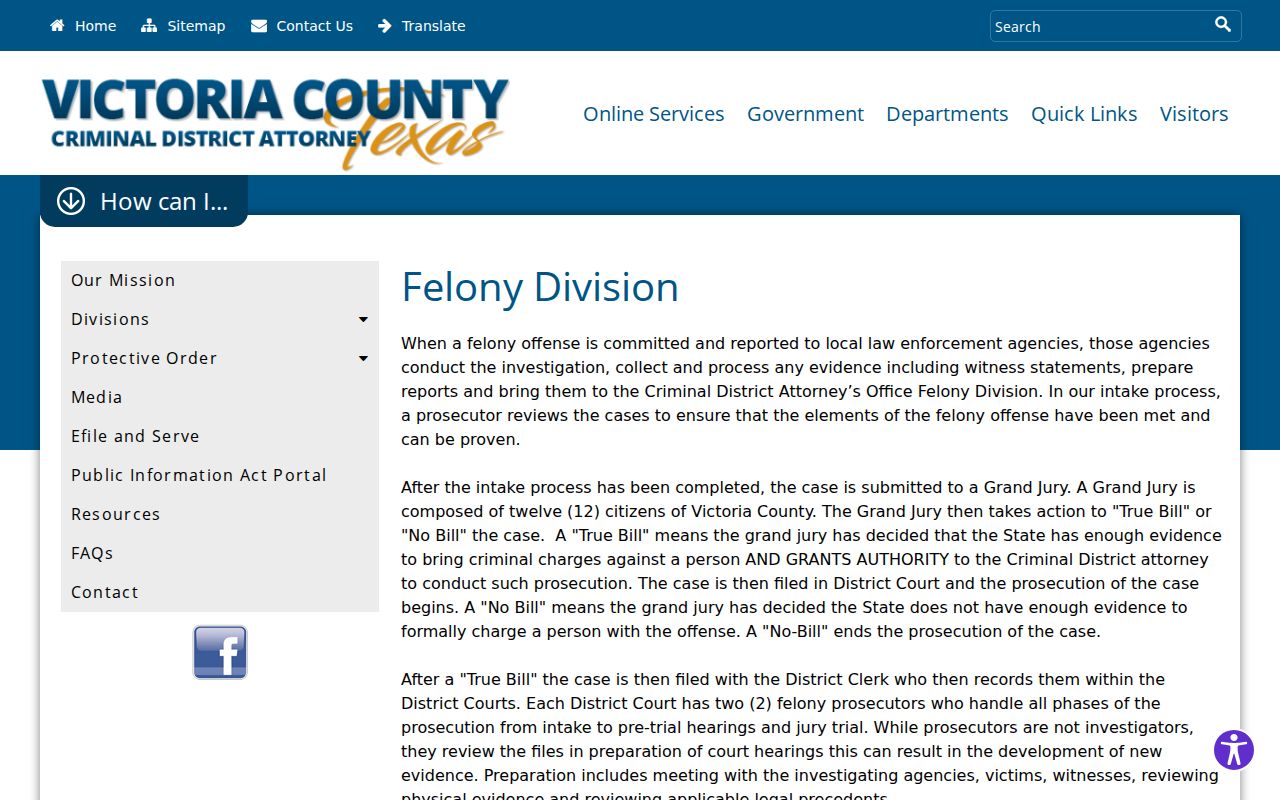
That sequence explains why a Victoria County booking can predate the first public felony docket entry.
What a Criminal Case File Contains
A court file records prosecution, not merely custody. Its cause number and assigned court anchor the record. The charging document states the accusation accepted for court. Later docket events mark filings and hearings. A plea, order, judgment, and sentence show how the filed charge changed or ended. Some images may be available online, while others require inspection or a copy request. Never assume every pleading is downloadable without cost.
| Cause number and court | The local identifier, assigned court, case type, filing date, and current status. |
|---|---|
| Charging document | An indictment for a filed felony or the complaint and information used for an accepted misdemeanor. |
| Docket entries | A dated list of pleadings, motions, notices, hearings, and court orders. |
| Settings and bond | Scheduled proceedings and bond entries that the court makes part of its file. |
| Plea and disposition | The response to the charge and its outcome, such as conviction, dismissal, acquittal, or deferred adjudication. |
| Judgment and sentence | The signed result, punishment, costs, and supervision terms when applicable. |
A full court file offers facts that a jail roster cannot. For the custody side of the event, use the contextual Victoria County arrest search rather than treating the filed charge as a booking log.
Victoria County Docket Terms
Several short terms carry major consequences in Victoria County case records. Read them as procedural labels, not as a verdict about the person. A dismissal differs from an acquittal, and deferred adjudication differs from both. Likewise, a true bill starts a felony prosecution but does not establish guilt. The judgment and disposition entries supply the resolved result.
- Arraignment
- The proceeding where the accusation is presented and a plea is taken.
- True bill
- The grand jury's approval of a felony indictment for prosecution.
- No bill
- The grand jury's decision not to authorize the proposed felony indictment.
- Deferred adjudication
- A court defers a final guilt finding while community supervision is completed; it is not an acquittal or expunction.
- Disposition
- The recorded outcome, such as conviction, dismissal, acquittal, or deferred adjudication.
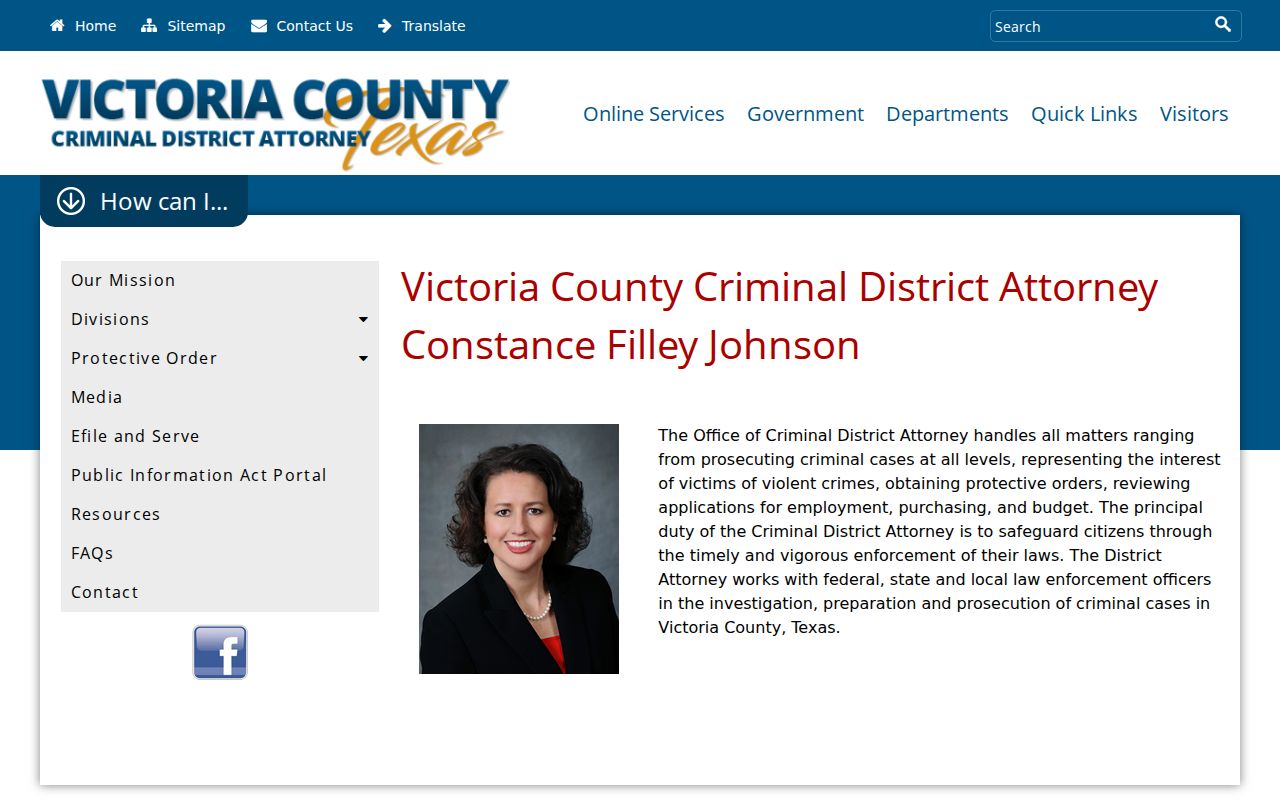
The prosecutor screens charges, but filed pleadings and judgments are obtained from the appropriate clerk.
Criminal Case Stages in Victoria County
Victoria County criminal proceedings move through distinct record-making steps. Arrest and magistration can precede any filed case. Prosecutor intake then determines whether an allegation will move forward and under what charge. For a felony, the grand jury stage sits between intake and indictment. Once filed, the clerk assigns the cause and records arraignment, pretrial motions, discovery events, plea or trial, disposition, and sentence. Appeals and post-judgment motions can add later entries.
Case flow: Charges Filed › Arraignment › Pretrial › Plea or Trial › Disposition › Sentencing
County Courts at Law publish useful local practice. Cases are randomly assigned. Attorney filings use e-file, fax filing is not authorized, and the courts state that they have no formal local rules. Dockets usually occur Monday and Wednesday at 9:00 a.m.; motions are generally Tuesday at 9:00 a.m. on nonjury weeks. A caller cannot secure a same-day continuance just by phoning. These details describe court operations, not a promise about any one case's timing.
Missing Victoria County Court Documents
A blank re:SearchTX result does not establish that no local case exists. Coverage and document access vary by court, item, account role, and charge. Start by checking the case type and spelling. Then search the Victoria County link with a cause number when possible. If the file is still absent, call the correct clerk and ask whether the case can be inspected at the counter or copied. For a certified disposition, request that specific item rather than a vague complete file.
Municipal Court has two additional limits. A new ticket may take one to three business days to appear, and final dispositions that are at least five years old are not shown in its public search. The court can be reached through courtclerk@victoriatx.gov. City police and Municipal Court moved to 2525 N. Main Street in February 2026, so older pages that point to former counters should not guide an in-person visit.
Federal cases require another route. PACER is the official electronic docket system for federal court records.
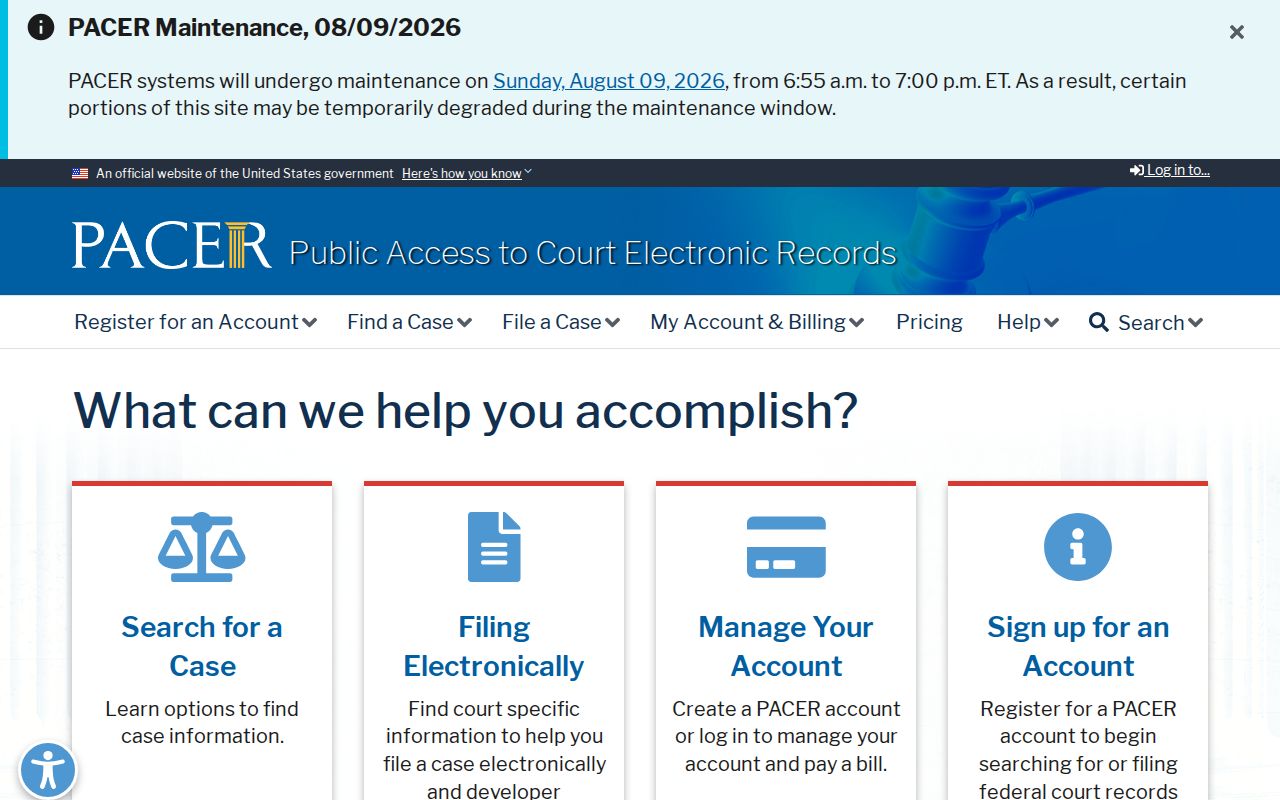
PACER covers the Southern District of Texas docket layer, not Victoria County District or County Court at Law files.
Access Rules for Case Records
Texas court rules and standards and agency access law protect some material even when a docket exists. The Texas Public Information Act generally provides access to government information, subject to confidential material and exceptions. Yet a request must go to the custodian. Police narratives and body-camera footage belong with the agency. Filed pleadings belong with the clerk. The PIA does not require an office to answer questions or create a custom criminal-history summary.
Public views may redact full Social Security numbers, driver's-license data, minor or victim identifiers, confidential addresses, and other protected facts. Juvenile files, expunged records, nondisclosed information, sealed items, and some active investigative material have added limits. An order of nondisclosure restricts public dissemination without destroying every government record. Expunction under Chapter 55A is a separate remedy that can direct qualifying arrest records to be destroyed or returned.
If a Victoria County case appears wrong, obtain the source clerk record and a certified disposition. Correcting the clerk file and correcting the Texas Department of Public Safety repository are separate tasks. A fingerprint-supported personal review is the reliable way to identify one's own DPS arrest cycle before a challenge.
Victoria County Clerk Counter Access
In-person access remains useful for certified copies and files that do not render online. The District Clerk is at 115 N. Bridge Street, Room 330. Visitors pass a metal detector and security checkpoint. The county bans weapons and hazardous materials in the complex. Free parking is documented at the Bridge Street Annex lot at 205 N. Bridge Street, with an overflow area near Moody and Forrest. Juror qualification takes place in the historic courthouse's second-floor courtroom.
Victoria County District Clerk
115 N. Bridge St., Room 330
Victoria, TX 77901
361-575-0581
Monday to Friday, 8:00 a.m. to 4:45 p.m.
Victoria County Clerk
Victoria County courthouse complex
Victoria, TX 77901
361-575-1478
Call about County Courts at Law copies.
Call before travel when a particular file, certified copy, or courtroom setting is the purpose of the visit.