
Victoria County Criminal History Checks
No single database provides a complete Victoria County record. Start with the event and its likely custodian. The Victoria County Sheriff's Office jail search is the first stop for current local custody. Felony filings belong with the Victoria County District Clerk, while the County Clerk supplies filed Class A and B misdemeanor documents. Fine-only city matters use the official Victoria Municipal Court search. Each source answers a narrower question than a broad name check.
Gather the full legal name, spelling variants, date of birth when lawfully available, approximate event date, and any report, booking, citation, or cause number. A unique number is safer than a name alone. Then reconcile the intake charge with the prosecutor's filing and the court disposition. Use certified copies when the exact order or judgment matters.
- Check current custody through the Victoria County jail channel and note any booking number, agency, charge, bond, and status shown.
- Choose the proper court: Municipal Court for city fine-only cases, County Clerk for Class A or B misdemeanors, or District Clerk for filed felonies.
- Search Texas DPS for the public statewide criminal-history portion, using complete names and birth details to narrow possible matches.
- Compare arrest, court, and DPS entries. A missing item may reflect filing delay, a no bill, restricted access, or a reporting mismatch.
- For review of your own identity-linked Texas record, follow the DPS fingerprint Personal Review process instead of relying on a same-name result.
Note: A Victoria County arrest can exist before any clerk assigns a cause number, especially while prosecutors or a grand jury review it.
Four Victoria County Record Counters
Victoria County record access turns on both offense level and record type. Sheriff reports and jail bookings route to the Glass Street office. Felony pleadings, settings, orders, and judgments route to the District Clerk in Room 330 of the courthouse. County Clerk staff handle documents filed in the two County Courts at Law. City police reports and Municipal Court files now route through Victoria's Public Safety Headquarters, not the older addresses that can still surface online.
| Record sought | Victoria County channel | Best identifier |
|---|---|---|
| Sheriff report or booking | VCSO or Victoria County Jail | Report or booking number |
| Filed felony case | District Clerk | Cause number |
| Class A or B misdemeanor | County Clerk | Cause number and court |
| City report or fine-only case | VPD or Municipal Court | Incident, citation, or case number |
The county itself warns readers to contact the office responsible for the arrest or case. The official Victoria County routing page illustrates that division.
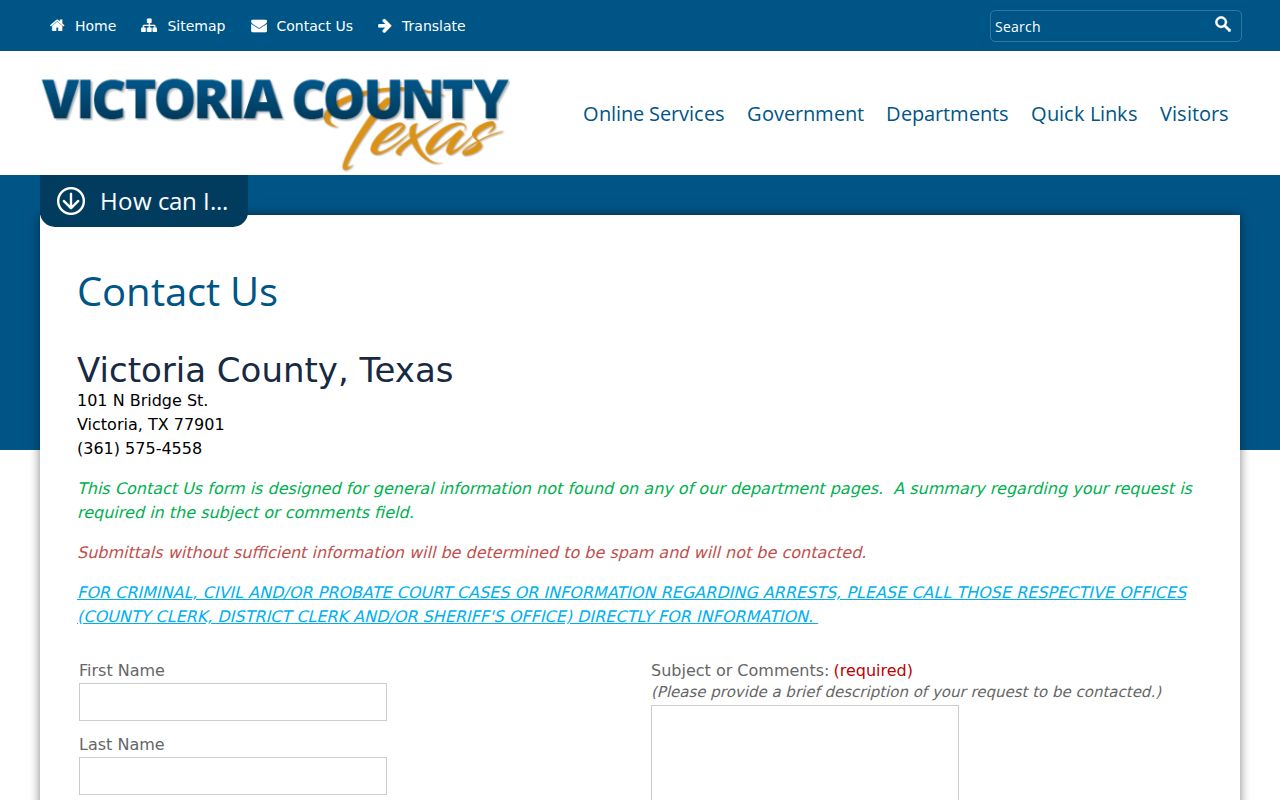
The routing notice helps prevent a common delay: asking a court clerk for a police narrative, or asking the sheriff for a filed court judgment.
Official Background Checks in Texas
The Texas Department of Public Safety Crime Records Division maintains the statewide repository. Its public Criminal History Name Search returns the portion of computerized criminal history that state law makes public, chiefly reported convictions and deferred adjudications. It does not replace a Victoria County court file, a fresh jail booking, or a fingerprint match. Each submitted search uses one $1 credit, even when no match appears. Credit-card purchases add a 2.25 percent fee per credit and a 25-cent transaction fee.
DPS Personal Review is the stronger route for a person reviewing their own Texas record. It uses FAST electronic fingerprints captured through IdentoGO by IDEMIA. The appointment begins with an authorized service code. Do not guess at that code because it identifies the transaction and controls the process. A VPD local clearance letter is different again: it costs $7.50, requires Texas photo identification, and reflects local Victoria Police Department records rather than all of Texas.
| Official product | Scope | Known charge |
|---|---|---|
| DPS public name search | Public Texas repository data | $1 credit per submitted search, plus card charges |
| DPS Personal Review | Your fingerprint-linked Texas record | Shown through the authorized FAST service path |
| VPD clearance letter | Local VPD history | $7.50 with Texas photo ID |
| FBI Identity History Summary | Your fingerprint-linked FBI history | Confirm the current fee in the official portal |
Note: A VPD clearance letter does not include every Victoria County agency or any complete statewide criminal history.
Victoria County DPS Record Search
DPS asks for complete first and last names. A middle or maiden name and complete or partial birth date can narrow the result. Nicknames, initials, and partial names are poor inputs. The system also applies Soundex, which can return spelling variations that sound alike. A possible match may therefore belong to someone else. Review the descriptive preview carefully and use fingerprints when identity is the point of the inquiry.
| Search field | Required | Victoria County search tip |
|---|---|---|
| Last name | Yes | Use the full surname, not an initial or partial spelling |
| First name | Yes | Enter the full given name |
| Middle or maiden name | No | Add both when known to reduce same-name ambiguity |
| Complete birth date | No | Month, day, and year offer the narrowest date match |
| Partial birth date | No | A known month, day, or year can still refine results |
The DPS search instructions show the name fields, credits, matching rules, and warnings used for public searches.
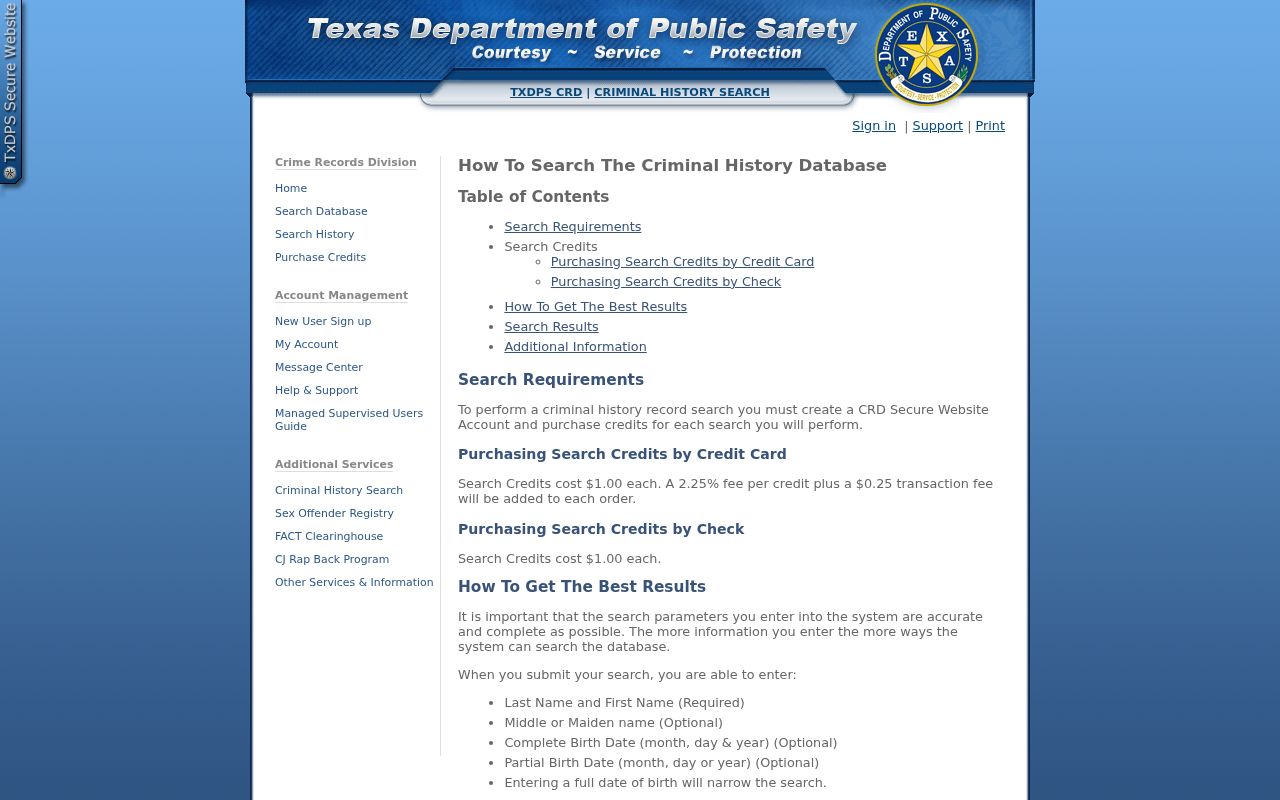
Those instructions explain why a Victoria County result should be checked against local court records and not accepted from name similarity alone.
Kinds of Criminal Records
One Victoria County event can create several records, each at a different time. The police or sheriff writes an incident and arrest report. Jail staff create a booking file if the person enters local custody. The Criminal District Attorney decides whether and how to prosecute. A clerk begins the court file when a charge is filed. Fingerprints and later disposition reports may then feed the DPS repository.
- Arrest and booking records: agency narratives, intake charges, booking time, bond, release, and custody facts.
- Criminal case files: charging papers, dockets, hearings, pleas, rulings, judgments, sentences, and costs.
- DPS criminal history: statewide reportable arrest cycles, convictions, and deferred adjudications available at the permitted access level.
- Warrant records: the issuing court's event and the executing agency's service information, subject to access limits.
- Supervision and registry records: court-ordered community supervision, TDCJ parole data, and public registration data where authorized.
A booking allegation can change after prosecutor review. Likewise, a dismissal does not erase the underlying arrest. Read each Victoria County record for the stage it documents.
Victoria County Custody Record Paths
Use the Victoria County Jail channel for current pretrial or short-term local custody. If no result appears, call VCSO at 361-575-0651. A release, transfer, processing delay, or different name spelling can explain an empty search. For a focused older record, ask VCSO for the exact booking sheet, bond entry, or release record under the Texas Public Information Act.
After a state sentence and transfer, the TDCJ Online Inmate Search becomes the proper source. It can use a TDCJ number, SID, or name with optional race and sex fields. Federal custody is separate. The Bureau of Prisons locator uses a name or a federal identifying number and does not cover the Victoria County Jail or TDCJ.
The TDCJ offender-information page distinguishes online, phone, and email channels for state custody. A projected release date can change and is not a promise of release.
For the federal layer, the Bureau of Prisons Inmate Locator shows the search routes available for federal prisoners.
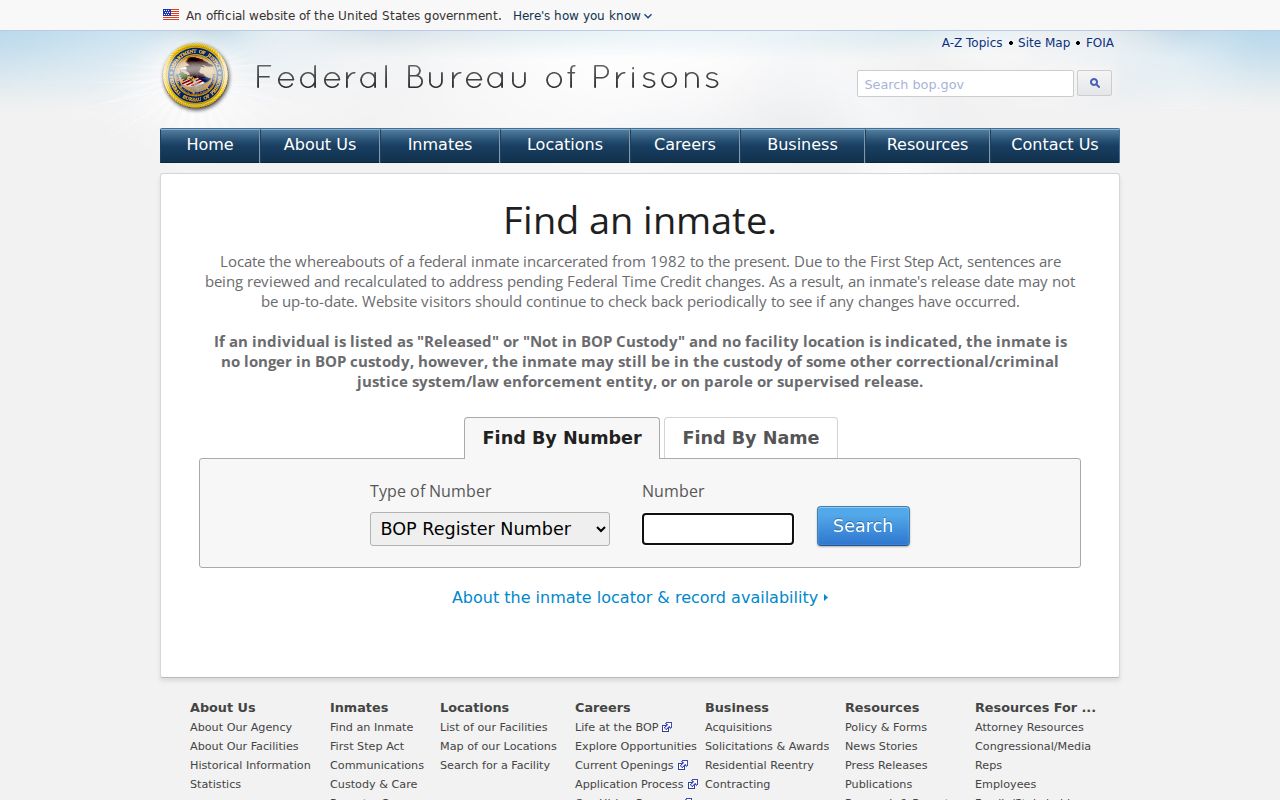
The separate federal screen makes the custody boundary plain: a missing BOP result says nothing about local jail or Texas prison status.
Note: Victoria County Jail, TDCJ, and BOP are separate custody systems, so always search the level that matches the person's last known case stage.
Victoria County Criminal Records: What They Contain
A full record is assembled from source files, not one uniform report. A fingerprint-supported DPS history can contain primary and secondary names, descriptors, state and federal identifiers, arrest cycles, reporting agencies, charges, dispositions, sentences, and supervision data. A Victoria County court file adds its cause number, assigned court, filing date, parties, counsel, docket events, bond, plea, judgment, costs, and available images. Jail data instead focuses on intake and custody.
| Name & Identifiers | Legal and alternate names, birth information, descriptors, SID or FBI identifiers where the access level permits them. |
|---|---|
| Arrest / Booking Data | Agency, arrest and booking dates, booking number, intake charge, bond, holds, and custody or release status. |
| Charges & Statutes | Alleged offense, later filed charge, legal citation, severity, and charging instrument. |
| Disposition | Conviction, acquittal, dismissal, deferred adjudication, no bill, or another recorded result. |
| Sentence | Confinement, fines, restitution, or community-supervision terms ordered by the court. |
| Custody / Supervision | County jail status, TDCJ placement, court supervision, or parole information available through the proper custodian. |
Public copies often suppress full Social Security numbers, driver's-license data, minor and victim identifiers, medical details, and confidential addresses. A blank field may reflect a legal limit rather than missing work by the custodian.
Note: The absence of a public field does not mean Victoria County never created or legally retained the underlying information.
Victoria County Charging Record Flow
Victoria County publishes a clear local charging path. Law enforcement sends reports to the Criminal District Attorney. Prosecutors review whether the proof supports a charge. An accepted Class A or B misdemeanor proceeds by complaint and information in a County Court at Law. A felony goes to a 12-member grand jury. A true bill authorizes an indictment, which then reaches the District Clerk; a no bill means that grand jury did not authorize the prosecution.
Local record flow: Arrest or report → CDA review → complaint and information or grand jury → clerk filing → docket and hearings → judgment or other disposition → report to DPS.
This sequence explains why a new Victoria County arrest may appear in jail data but not in a District Clerk search. The clerk cannot display a felony cause that has not been filed. Readers following a prosecution can use the contextual Victoria County Court Case Lookup for the filed-case channels and document fields.
The Victoria County Criminal District Attorney's official page identifies the local prosecution office and anchors the handoff between an agency report and the filed charge that later appears in a clerk's Victoria County case record.
Texas Public Access Laws
Texas law opens many government records while protecting specific data. The key rule is to ask the custodian for an existing document. The Public Information Act does not require Victoria County to answer questions, do legal research, or create a custom criminal-history summary. Court copies remain clerk work; police narratives and body-camera files remain agency work; current booking data belongs with the sheriff and jail; statewide public history belongs with DPS.
Key Statutes:
Texas Government Code Chapter 552 gives the public a right to inspect or copy public information, subject to confidentiality and exceptions.
Texas Government Code Chapter 411 governs DPS criminal-history dissemination and orders of nondisclosure.
Code of Criminal Procedure Chapter 55A sets current Texas expunction rules and agency duties.
Code of Criminal Procedure Chapter 62 controls sex-offender registration duties and public registry access.
Juvenile material, victim-sensitive details, active-investigation information, confidential identifiers, and restricted criminal history may be withheld or redacted. Public access also never turns an arrest allegation into proof of guilt.
Victoria County Criminal Record Requests
When no portal has the needed Victoria County record, send a focused written request to the body that keeps it. Texas permits mail, email, hand delivery, or another method approved by that agency. Identify the event date, approximate time, location, person, and known report or booking number. Ask for exact documents, such as the offense report, arrest supplement, booking sheet, bond entry, or release record. A broad demand for “all records” can add delay and cost.
- Confirm whether VCSO, VPD, a clerk, DPS, or another agency created the record.
- Describe the existing record and give a narrow date range plus unique numbers when known.
- State the preferred form of access, such as electronic copies, paper copies, or inspection.
- Ask for a cost estimate when no official Victoria County fee schedule covers the item.
- Keep the request and response so any clarification, redaction, or Attorney General ruling can be traced.
The Texas Attorney General's request guidance explains valid written delivery routes. Ordinarily, the agency acts within ten business days by releasing material, setting a production date, reporting no responsive records, relying on a prior ruling, or seeking an Attorney General decision. Ten business days is not an automatic production deadline.
Victoria County Warrant Record Fallback
No stable official public Victoria County active-warrant list was documented in the research. Use a court-by-court fallback. Call VCSO, identify the issuing court, inspect the related case record, or send a precise request to the custodian. Fine-only Municipal Court status may appear in the city lookup. County Court at Law and District Court files can contain capias or warrant events, while Justice Court warrants remain with the proper precinct.
Do not walk into a law-enforcement office on the assumption that a warrant can be cleared without detention. Confirm the court, cause number, charge, bond or hold status, and resolution instructions with the issuing court or counsel. Keep written proof after a warrant is cleared because updates can take time to reach every system.
- Arrest warrant
- A judicial command based on probable cause directing an arrest.
- Capias
- A court writ directing arrest after a case event, missed setting, or other legal trigger.
- Capias pro fine
- A writ used in enforcement after a fine-only judgment, subject to the governing court process.
- Search warrant
- Authority to search a place or item; it may remain unavailable while an investigation is active.
Restricted, Sealed & Expunged Records
Texas calls destruction or return of qualifying arrest records an expunction. Code of Criminal Procedure Chapter 55A includes paths tied to acquittals, certain pardons or innocence relief, and qualifying dismissals or no-charge outcomes. Eligibility applies to the full arrest transaction. A related charge can defeat or delay relief. Ordinary deferred adjudication more often points to an order of nondisclosure, not expunction.
A Victoria County petition must identify the person, arrest date, charge, agency, court or cause, disposition, and every entity that should receive notice. The exact filing total changes with the base fee and service on listed agencies, so request a current written quote from the correct clerk. An omitted agency may retain its copy. Nondisclosure restricts public release but does not destroy all records, and authorized entities may retain access under Chapter 411.
Juvenile files follow separate rules. After relief, check the local portal and obtain a DPS Personal Review once agencies have had time to process the order. The Victoria County source file and DPS repository may require separate correction work.
Note: Eligibility for expunction or nondisclosure depends on the full arrest transaction, final disposition, offense, and the current Texas statute.
Correcting Victoria County Criminal Records
A wrong clerk entry and a wrong DPS entry are not the same problem. First get a fingerprint-supported copy of your own Texas record and a certified disposition from the proper Victoria County clerk. Match the arrest cycle, charge, cause number, and final result. Ask the local source to correct its own case data, then follow the DPS challenge process with the supporting certified record.
The public name portal is useful for finding possible records, but it cannot prove that a same-name result belongs to you. DPS warns that fingerprints are the positive method of association. Search histories may persist even when a result is not the intended person. Save the records and correspondence used in the correction so later checks can be compared.
The Texas DPS Criminal History Name Search entry screen is the public repository starting point.
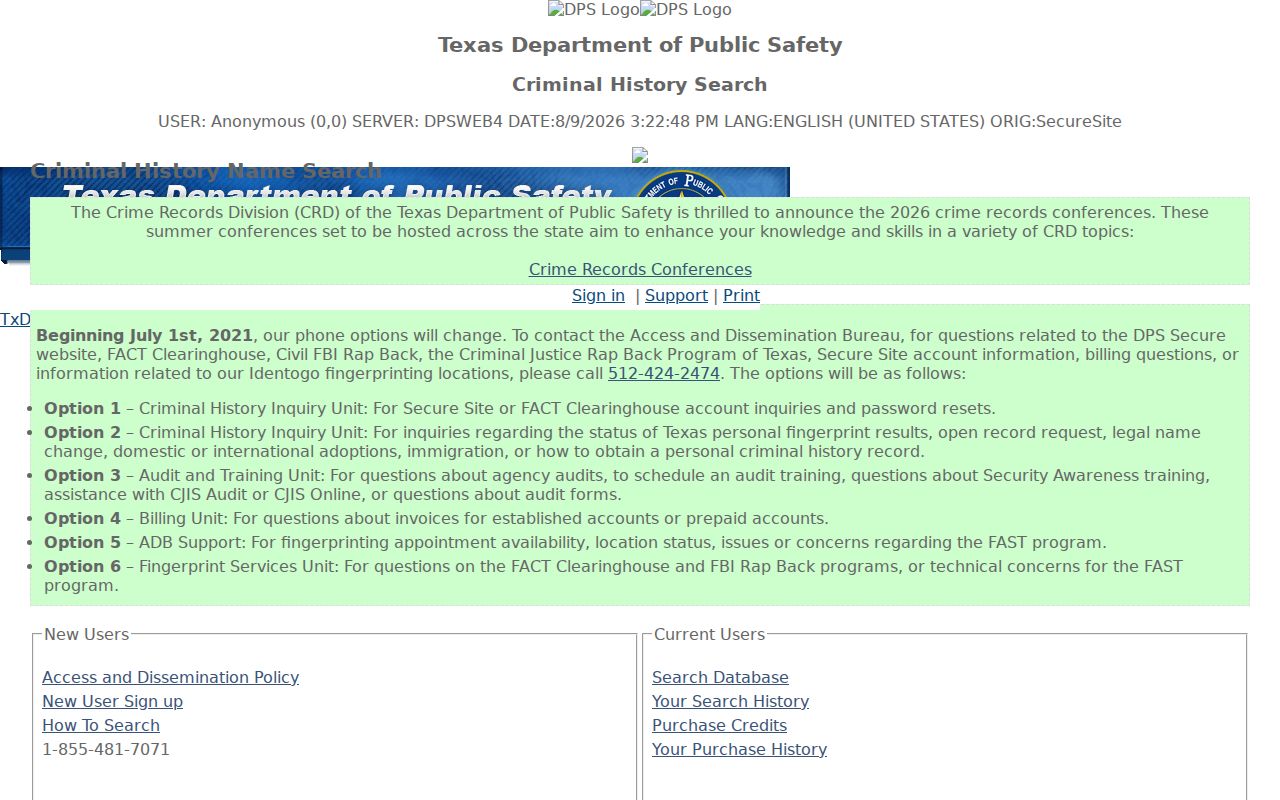
The screen is a statewide name-search gateway, not a substitute for certified Victoria County documents or fingerprint-based personal review.
For fingerprint review, the Texas FAST appointment entry begins with the authorized service code supplied for the transaction.
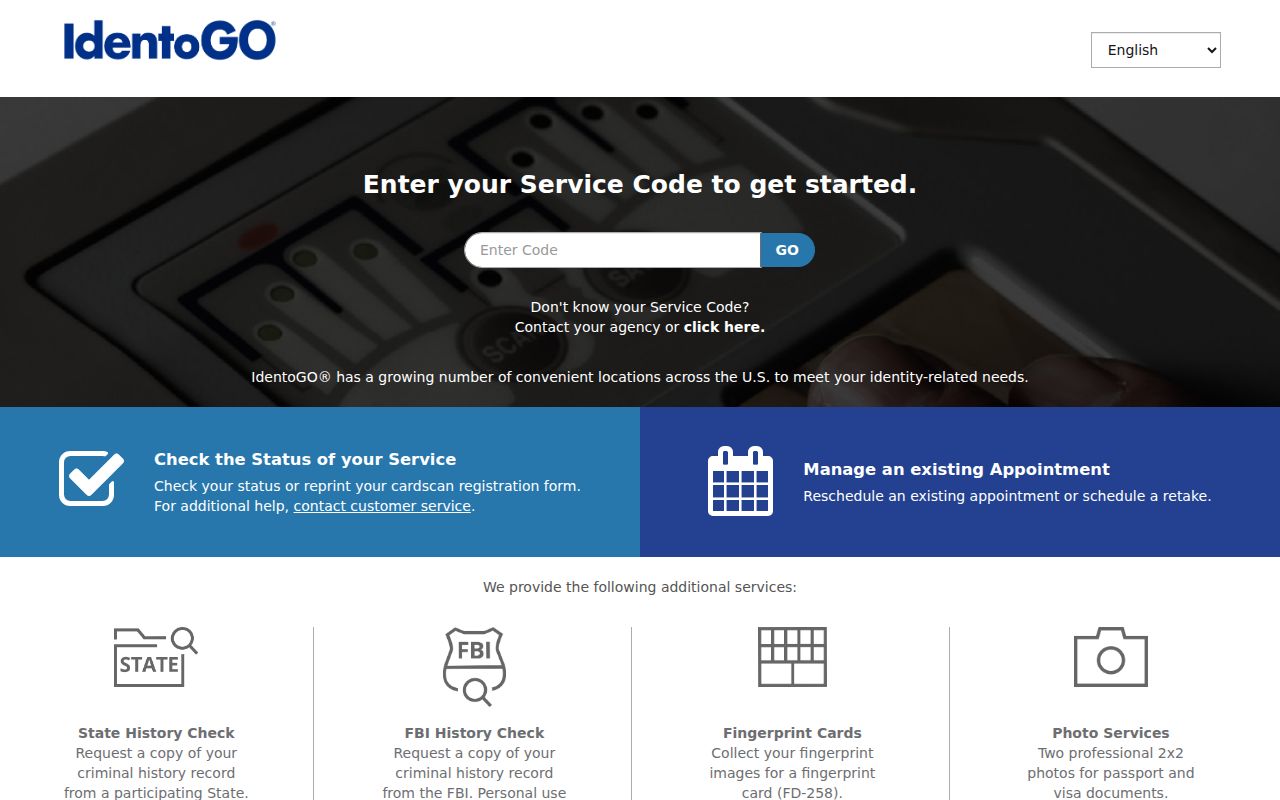
The service-code screen shows why a person should follow the official DPS instructions before scheduling rather than selecting a purpose by guesswork.
Note: Correcting a Victoria County court source does not by itself prove that DPS or another downstream system has received and processed the change.
Victoria County Charges and Supervision
Charge class directs a Victoria County record to the right court. Felonies, including state-jail through first-degree cases, go to District Court after the local felony process produces a filing. Class A and B misdemeanors belong in the County Courts at Law. Class C, fine-only state offenses and city ordinance matters can sit in Municipal or Justice Court. Enhancements and offense-specific statutes can alter a baseline, so use the charging instrument and judgment rather than an intake label.
A jail booking class remains provisional. Prosecutors can accept a different charge, decline it, or send a felony to the grand jury. That is why the later court file is the better source for what was actually prosecuted and how it ended. The Victoria County Arrest Search covers the booking side and the handoff from law enforcement to the courts.
The 24th Judicial District Community Supervision and Corrections Department serves Victoria County adults placed on community supervision, the Texas term often called probation. A court file may show the term, a motion to revoke or adjudicate, the hearing, and the outcome. Operational treatment and officer notes are not a public lookup. Parole is separate: the Board of Pardons and Paroles makes release decisions, and the TDCJ Parole Division supervises releasees. Verify the judgment with the clerk before asking the proper supervision agency for information it may lawfully disclose.
Victoria County Criminal Record Offices
Call before visiting, especially when a file may be restricted or stored off site. The District Clerk counter serves filed felony matters during its published weekday hours. VCSO handles sheriff-created reports and Victoria County jail records. City police records moved to the North Main headquarters in February 2026, so older Bridge Street or Juan Linn references should not be treated as alternate counters.
Victoria County District Clerk
115 N. Bridge St., Room 330
Victoria, TX 77901
361-575-0581
Monday-Friday, 8:00 a.m.-4:45 p.m.
Victoria County Clerk
Victoria County courthouse complex
Victoria, TX 77901
361-575-1478
Filed County Courts at Law records
Victoria County Sheriff's Office
101 N. Glass St.
Victoria, TX 77901
361-575-0651
Sheriff reports, jail and booking records
Victoria Public Safety Headquarters
2525 N. Main St.
Victoria, TX 77901
361-485-3700
VPD Records and Municipal Court
The District Clerk publishes a criminal-settings line at 361-578-8756 in addition to its main number. Courthouse visitors pass through weapons screening, while free public parking is documented at the Bridge Street Annex lot. Those details concern access to the county complex; they do not change which clerk owns a record.
City-by-City Criminal Records in Victoria County
Victoria is the only incorporated city in Victoria County. Bloomington, Inez, Placedo, Nursery, and other communities are unincorporated, so they do not have a separate qualifying city police and municipal-court pair. The Victoria city record path adds VPD reports and Municipal Court fine-only cases to county sheriff, jail, prosecution, and clerk records.
Victoria Record Check
VPD Records and Victoria Municipal Court now share the Public Safety Headquarters at 2525 N. Main Street.
City citations can take one to three business days to appear, and final dispositions at least five years old do not remain in the public municipal search. County court and DPS sources still need separate review when the matter moved beyond a fine-only city case.